The History of the Light Cavalry
The Light Cavalry was originally formed in 1861. In 1891 the Light Cavalry was disbanded and absorbed into the Horse Artillery element of the Honourable Artillery Company (HAC)
In 1979 a new ceremonial Light Cavalry unit was formed within the HAC. Its chief proponent was Major Gerald Flint-Shipman, an officer in the Territorial Army Royal Green Jackets and non-regimental member of the HAC, who became its first commander. The Light Cavalry consists of the mounted ‘G Troop’ and dismounted ‘City Troop’.
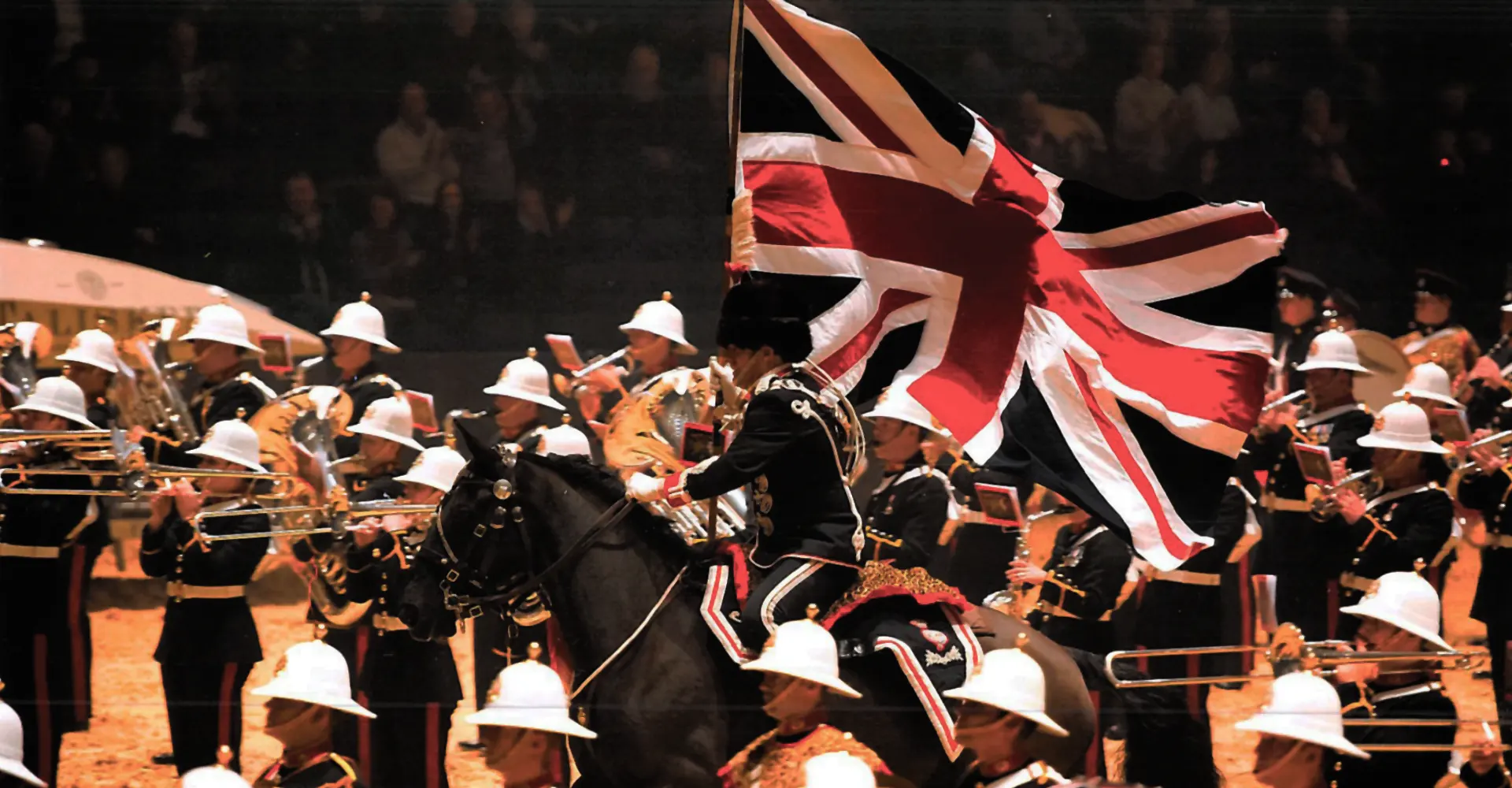
Duties include escorting the Lady Mayoress on the Lord Mayor's parade along with providing a carpet guard at the Law Courts. The Light Cavalry provide various escort parades throughout the year and also provide tent pegging displays.
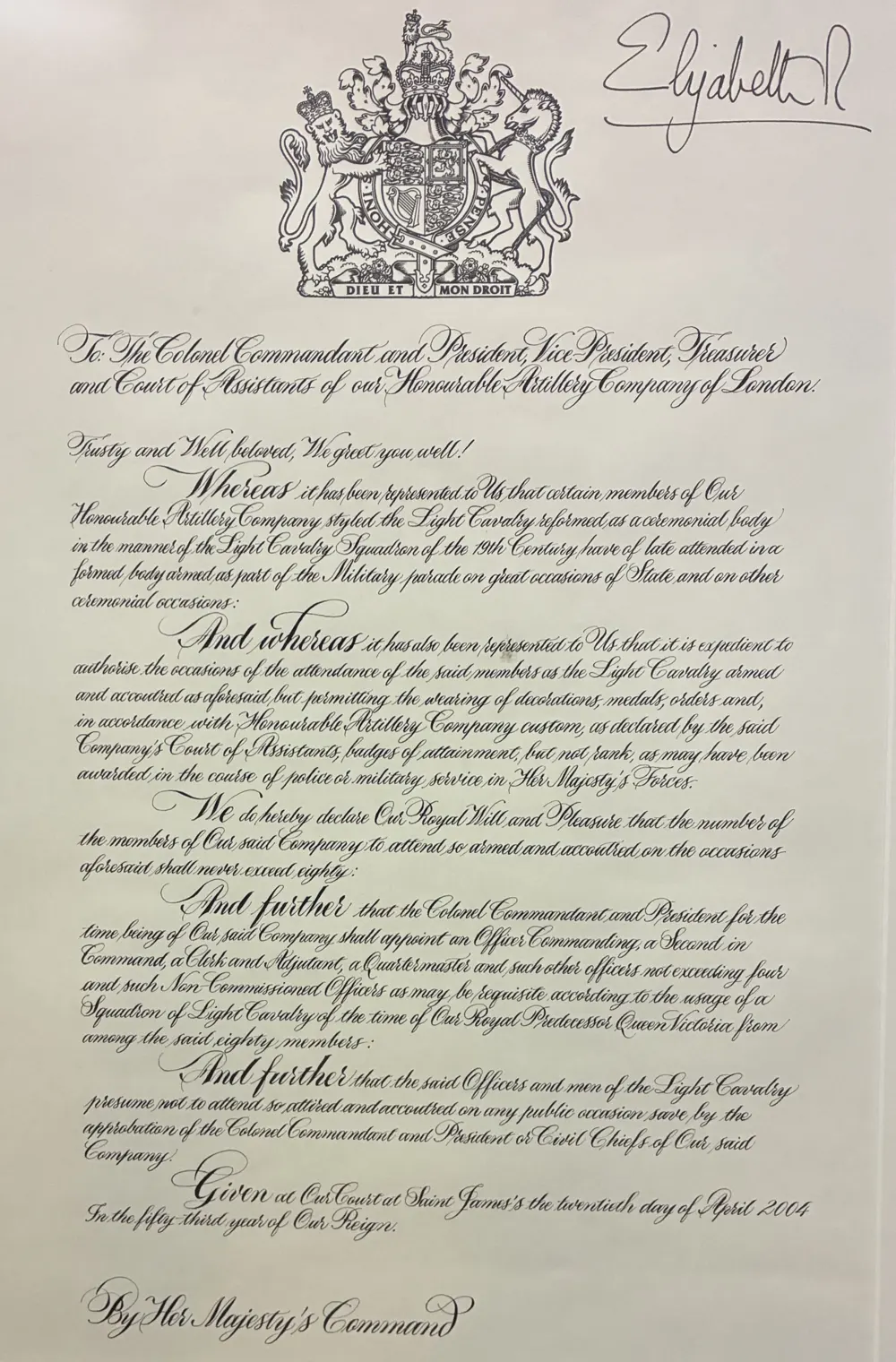
In April 2004, the Captain General of the HAC, Her Majesty Queen Elizabeth II, presented to the Light Cavalry a Royal Warrant that enacts the rights and responsibilities of this sub-unit of her famous Regiment.
The Origin of the Honourable Artillery Company
The true date of the Company’s origin is unknown. Claims have been made that the Company existed in the Middle Ages or even earlier; but these have not been proved. However, Trained Bands of men were raised to defend the City of London in the late 1400s and early 1500s and it seems certain that their leaders were provided by or associated with a ‘St George’s Guild’.
The King's Rolls of Payments contain several entries between 1509 and 1515 of sums paid to the Fraternity of St George's Guild but it is not known for certain whether these men were the true predecessors of the HAC.
On 25 August 1537, King Henry VIII issued Letters Patent to the “Overseers of the Fraternity or Guild of St George” and authorised them to "begin, found and establish a certain perpetual corporation for the better increase of the defence of this Realm, with the name of the Fraternity or Guild of Artillery of Longbows, Crossbows and Handguns".
For over a century this body was known by many different names, which usually incorporated the word Artillery, but it was not referred to as the Artillery Company until 1656. The prefix ‘Honourable’, first used in 1685, was officially confirmed by Queen Victoria in 1860. The spelling ‘Honorable’ was correct earlier and is perpetuated in the Ancient & Honorable Artillery Company of Boston, Massachusetts, as also in the present cipher of the Light Cavalry.
The word Artillery in the Company's title has no direct connection with guns or gunnery. It is used in its obsolete sense meaning any missile weapon, or weapon of volley such as crossbows or muskets.
No other regiment that existed in 1537 remains in being in Britain nor, almost certainly, anywhere else.
The Light Cavalry Royal Warrant
To: The Colonel Commandant and President, Vice-President, Treasurer and Court of Assistants of our Honourable Artillery Company of London.
Trusty and Well beloved, We greet you well!
Whereas it has been represented to Us that certain members of Our Honourable Artillery Company styled the Light Cavalry reformed as a ceremonial body in the manner of the Light Cavalry Squadron of the 19th Century have of late attended in a formed body armed as part of the Military parade on great occasions of State and on other ceremonial occasions:
And whereas it has also been represented to Us that it is expedient to authorise the occasions of the attendance of the said members as the Light Cavalry armed and accoutred as aforesaid but permitting the wearing of decorations, medals, orders and, in accordance with Honourable Artillery Company custom, as declared by the said Company’s Court of Assistants, badges of attainment, but not rank, as may have been awarded in the course of police or military service in Her Majesty’s Forces.
We do hereby declare Our Royal Will and Pleasure that the number of the members of Our said Company to attend so armed and accoutred on the occasions aforesaid shall never exceed eighty:
And further that the Colonel Commandant and President for the time being of Our said Company shall appoint an Officer Commanding, a Second in Command, a Clerk and Adjutant, a Quartermaster and such other officers not exceeding four and such Non-Commissioned Officers as may be requisite according to the usage of a Squadron of Light Cavalry of the time of Our Royal Predecessor Queen Victoria from among the said eighty members:
And further that the said Officers and men of the Light Cavalry presume not to attend so attired and accoutred on any public occasion save by the approbation of the Colonel Commandant and President or Civil Chiefs of Our said Company.
Given at Our Court at Saint James’s the twentieth day of April 2004 In the fifty-third year of Our Reign.
By Her Majesty’s Command
Key Light Cavalry Dates
1537 Letters Patent granted by Henry VIII on 25th August.
1588 Soldiers were mustered to address the threat from the Spanish Armada
1611 The HAC was re-formed
1635 First publication of "Military Discipline or the Young Artilleryman"
1641 Later the King Charles II and King James II enrolled as members
1642 The Civil War
- Majority sides with Cromwell, one regiment turned the day against the Royalists at Newbury, in 1643.
- Company's silver, arms and records placed in safe keep until hostilities ceased
1660 Restoration of the Monarchy, membership increased strengthening loyalty to the Crown
1664 Colonel in Chief renamed ‘Captain-General’ and held by the Sovereign
1722 King George I Royal Review in St James's Park
1735 Armoury House built, replacing a smaller armoury hall on the same site
1780 Gordon Riots, the Company saw action at Broad Street, Poultry and Blackfriars Bridge
1781 The City Corporation purchased two 3-pounder guns
1830 William IV authorises HAC uniform to be of the Grenadier Guards with silver lace replacing gold
1860 Captain Jay formed a troop of Horse Artillery, disbanded 1869
1861 The Light Cavalry raised as a battlefield reconnaissance unit
1891 The Light Cavalry Squadron becomes a Horse Artillery battery, later ‘A’ Battery
1899 Another field battery becomes a Horse Artillery battery, designated ‘B’ Battery.
1900-2 South African (Boer) War 193 members served, 6 fatalities and 30 wounded
1906 King Edward VII bestows a ribbon in the Royal colours to the long service decoration and medal
1907 The HAC joins the Territorial Force
1908 Parliament passes The Honourable Artillery Company Act, 1908
1914-1918 World War I
- 1914 1st Battalion sails for France on SS Westmeath, 18 September
- 1915 A & B Batteries sail for Egypt and serve in Aden and Palestine
- 1916 2nd Battalion arrives in France and serves later in Italy
- 1917 Victoria Crosses won by Lieutenants Haine and Pollard at Arras, 23 April
- 12,847 individuals served in the Great War, 4,950 were wounded, 940 killed
- 42 Battle Honours were won and 255 gallantry awards were made to those serving in HAC units
1919 HAC Detachment Metropolitan Special Constabulary formed.
1924 The privilege of firing Royal Salutes at HM Tower of London was granted to the Artillery Division.
1925 Company of Pikemen and Musketeers formed.
1939-45 World War II.
- 1939 Defended London, A & B Batteries become 11th (HAC) Regt RHA, C&D 12th (HAC) Regt RHA
- 1940 13th (HAC) Regt RHA formed from 12th Regt
- 1941 11th Regt to North Africa, honours at Knightsbridge, El Alamein, El Hamma, Tunis, Sicily, Coriano.
- 1942 12th Regt to Algiers: honours at Sbiba, Thala, Tunis, Cassino II, Senio.
- 1944 13th Regt to Normandy: honours at Bourguebus Ridge, Antwerp, Rhine. 86th Regiment takes part in the invasion: honour, Le Havre
- 17 Battle Honours were won, 453 honours and decorations awarded
- 723 members lost their lives; 3,800 were granted commissions
1945 11th, 12th, 13th, 86th Regiments suspended
1947 1st Regiment HAC (RHA) formed with A, B and C Field Batteries, G (HQ) Battery
1955 The Company of Pikemen and Musketeers receive Royal Warrant from Elizabeth II
1967 TAVR replaces TA. HAC reduced to one battery, one company, a training wing and band
1979 The Light Cavalry re-formed
1980 The Company marches through the City with the old Colours
1987 450th Anniversary Parade, Captain-General takes the salute at the Mansion House
1996 The Captain General parade to open the refurbished Finsbury Barracks
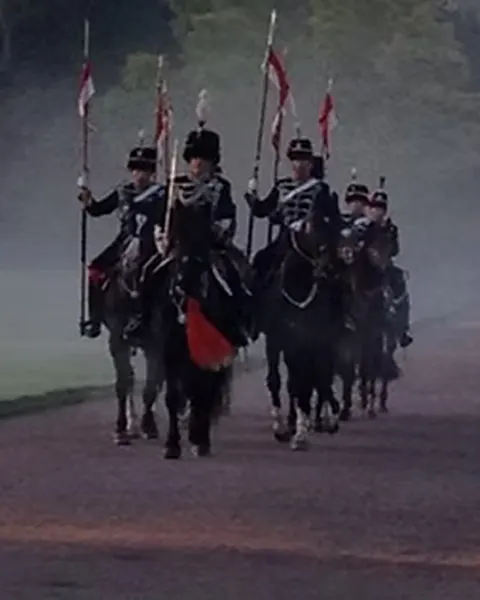
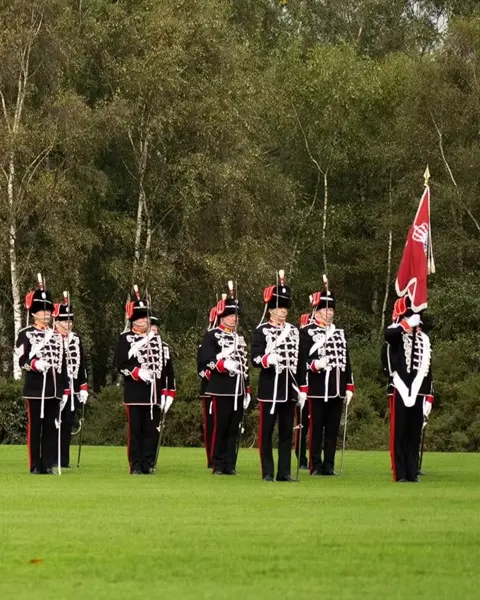
2004 The Captain General parade to present the Light Cavalry with her Warrant in Windsor Great Park
Honourable Artillery Company Battle Honours
The Boer War
South Africa l900-2
World War I
- Ypres 1915,’17 + Somme 1916,’18 + Ancre Heights 1916 + Ancre 1916 + Arras 1917,’18 +
- Scarpe 1917,’18 + Arleux + Bullecourt + Pilckem + Polygon Wood + Broodseinde + Poelcappelle +
- Passchendaele + Amiens + Albert 1918 + Bapaume 1918 + Drocourt-Queant + Hindenburg Line +
- Epehy + St Quentin Canal + Selle + Sambre + France & Flanders 1914-18 + Piave +
- Vittorio Veneto + Italy 1917-18 + Rafah + Egypt 1915-17 + Gaza + El Mughar + Jerusalem +
- Jordan + Megiddo + Sharon + Damascus + Palestine 1917-18 + Aden +
World War II
- Bourgebus Ridge + Antwerp + Le Havre + Rhine + North West Europe 1944-45 +
- Knightsbridge + El Alamein + El Hamma + Sbiba + Thala + Tunis + North Africa 1941-43 + Sicily 1943 + Cassino II + Coriano + Senio + Italy 1944-45 +
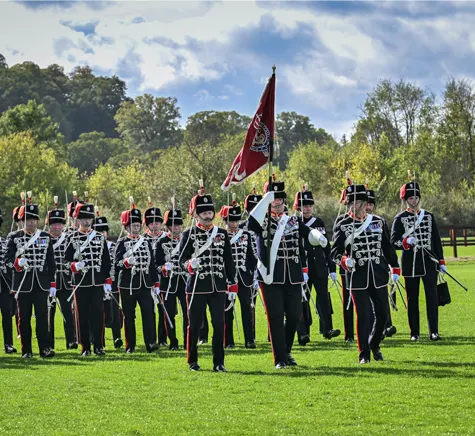
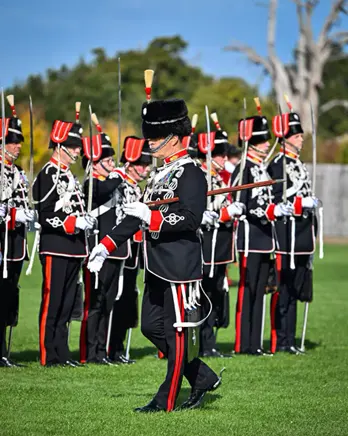
City Troop – The Light Cavalry, Dismounted
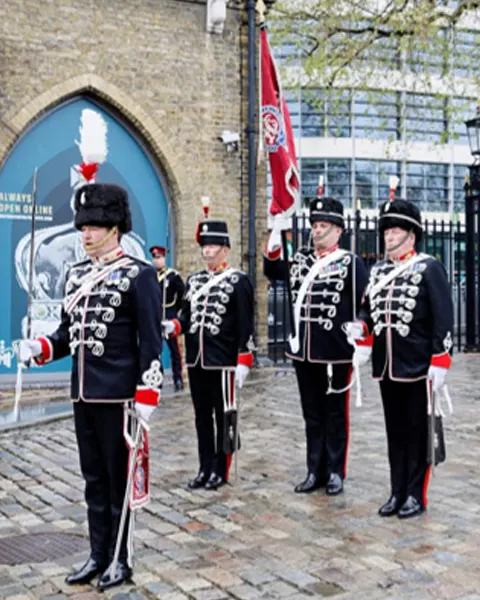
City Troop is the dismounted element of The Light Cavalry. It is formed of two sections, has approximately 30 cavalrymen in total, and is commanded by the Serjeant Major. City Troop performs the majority of duties in London, which range from ceremonial guards, step and carpet lining and escorts for the Lord Mayor’s Consort. It is the most visible and regularly deployed element of The Light cavalry.
G Troop – The Light Cavalry, Mounted
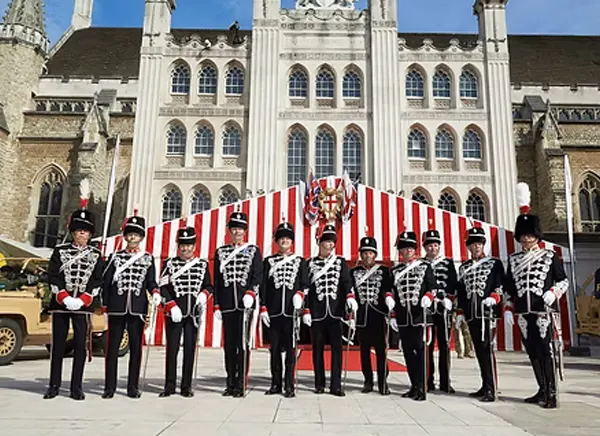
Formed in 1861, The Light Cavalry is the oldest ceremonial element of the mounted element of the Honourable Artillery Company. Commanded by the Riding Master, its three sections, include a Guidon bearer, trumpeter mounted on the only grey in the Stables and a Farrier with the axe. G Troop is the only UK mounted ceremonial element that conducts a canter past with compliments at its ceremonial parades.